
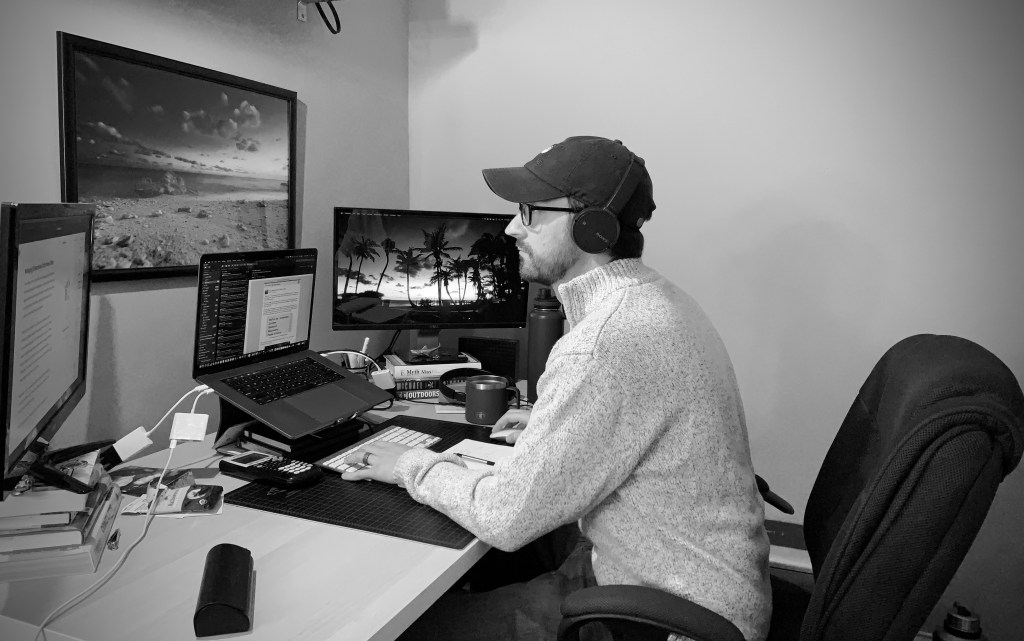
Managing Distractions in the Home Office

I want to get a bit more specific on how I manage distractions. I have mentioned before that the distractions of a home office can often be the biggest obstacle to productivity. Distractions increase the time it takes to get things done, impact the overall quality of our output and even prevent us from completing tasks altogether.

This is a bit of an extension and follow up to my previous posts, “Is Working From Home Awesome? Here are my Pros and Cons”, “Working From Home Survival Guide – The Fundamentals of Doing Well.” In these posts, I highlight my perspective on the different challenges of working from and then go a bit further into how to overcome some of these challenges. If you haven’t had a chance to check out either of those posts I encourage you to give them a quick read. 

Before I get into it, I am aware that different households offer their own unique distractions. I can’t cover every distraction out there but I feel this can help with just about any.

First off, there are really two types of distractions to understand. The first type is the external distractions. These external distractions are things that are going on outside of your office in your surrounding environment that you can not really control. An example would be in my case, my kids running around the house playing, often passing just outside my office doors. It’s the noisy stuff that can break focus and concentration. Another example is things like emails, texts, phone calls, notifications, etc. Essentially all the things your technology wants to throw at you to get your attention. 

The second type of distraction is what I refer to as an internal distraction. For me, this is all the mental stuff and honestly where I struggle the most. All the ideas, worries, thoughts, things to remember, things to do and so on. The funny thing about the internal distractions is that they really have nothing to do with working from home. Of course, since being at home can keep you in a home state of mind, often there are things on your mind that may not be if you were working elsewhere.

Some of these are specific to either external or internal but there is a lot of overlap and fixing one seems to help the other.

Isolate yourself

 I talk about this in the “Survival Guide” post. It is important to have a dedicated area that is separate from the rest of the house. Not only is this important for a handful of other reasons when it comes to working in general, but it is also a clear physical separation from the most common distractions. In addition, I find that using a dedicated office space in my house helps me get into the right state of mind for work. This on its own quiets a lot of the internal distractions and allows me to focus on what I need to be doing.

Do not try to control what you can’t control

 It might seem a little counterintuitive at first. Even though I am in a dedicated office space with doors, there can still be a lot of noise and chaos in the house. In the example I gave of my kids running around making noise, the initial thought might be to make them be quiet. Here is why I don’t like the idea of trying to control what happens in the house. First of all, I don’t think it’s fair for me to say how loud or playful they can be, so long as it’s within reason. After all, this is their house too. Just because my office is in the house, it doesn’t mean I should expect my house to become like an office. I wouldn’t tell my neighbor not to cut their grass during the day. This is because I know it’s unreasonable and that it won’t work. Even if I did try to create the unreasonable expectation of quiet while I work, I know kids are kids. Honestly, I want them to play and have fun and run around the house. So if I insist on quiet, but know it is an unlikely outcome, the noise will only become more distracting. In the long run, by embracing the reality of the noise and chaos in and out of the house, I have become so accustomed to it that I don’t even notice it anymore. If I don’t notice it, it’s not a distraction. Think about this for any distractions that you really don’t have control over, if you accept it, you will get used to it.

Control what you can control

 While there is a lot I don’t feel I can control around me, there is a lot that I can. The other example I used of technology being a distraction is representative of something I can control. I use my computer and my phone all day long for work. This means I have things popping up constantly with their little notification noises. For a long time, I felt captive to these notifications allowing them to distract me and change my behavior. There were two ways I could handle this, turn off all notifications, or train myself to work through them. Like I mentioned, for a long time the notifications prompted my immediate response because I knew the communications behind the notifications are really the lifeblood of my business. While turning them off and selecting specific times to check and respond to messages is a great approach, I knew it wouldn’t work for me. Rather, I forced myself to take control of the way I responded by making my priority whatever I was currently doing. I eventually noticed that if I got myself focused strictly on completing the task in front of me, the anticipation and urge to check messages went away. It took time, but now I can work right through all the messages as they come in because I know I will get to it when I am ready. As a matter of fact, as I type this, both my phone and computer are dinging with emails but I know I want to finish this paragraph first. All I do is remind myself that I am in control of where I look and what I do in response and then adjust accordingly. This works for me but if it wasn’t working or it stops, I will just turn off my notifications and start checking things periodically. 

 The important take away here is to honestly confront what it is that you can take control of and make the adjustments. A lot of it comes down to discipline. You are in control of whether you spend your day on social media or working. The internet offers an endless menu of potential distractions, you just have to confront whether you are in control or not, and adjust accordingly if needed.

Write it down, Organize, Prioritize, Execute

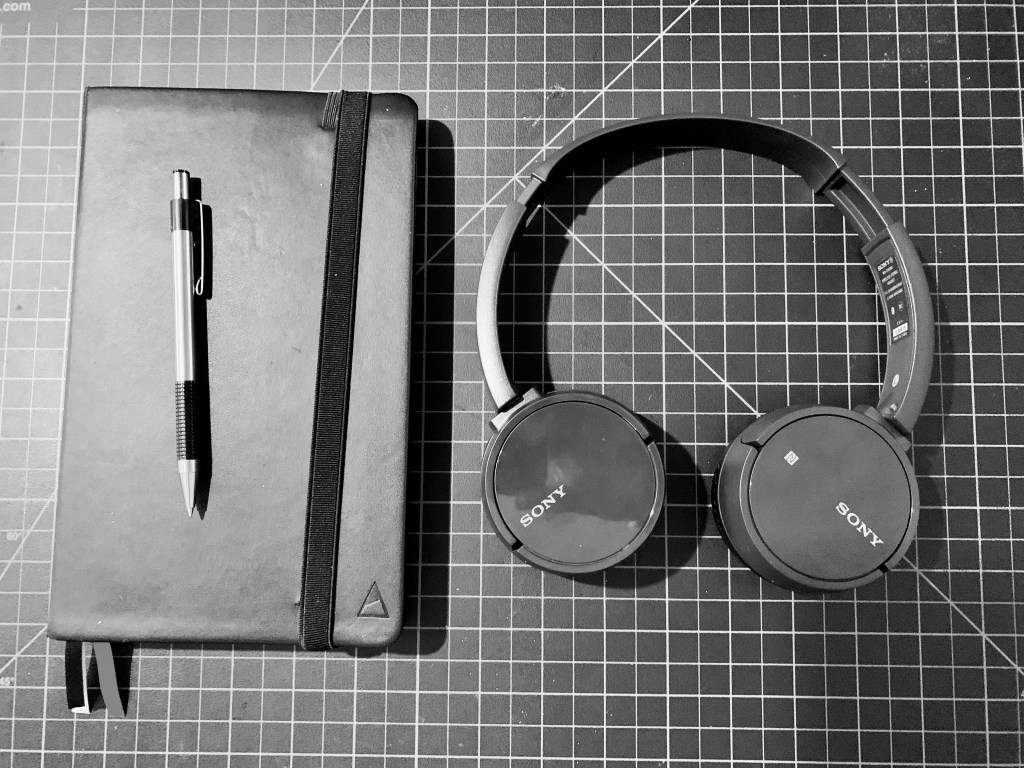
  Often one of the most significant distractions for me is the feeling of being overwhelmed. It makes it difficult to know where to start and furthermore makes it almost impossible to stay focused on anything. An exisiting part of my daily morning routine is to sit down and actually write out everything I need to do in my notebook. This keeps me from feeling overwhelmed but even still, things come up that can upset the balance of my entire day quite regularly. When this happens, in addition to everything I else I have to do I find myself getting distracted by the volume of work that just came across my desk. So I do the same thing again. I write it down, not necessarily just what I have to do but everything. I write out on paper what questions I have, what I know, what information I need etc. Then I organize all the info, prioritize my next task and get into it. It seems simple because it is, but often people fail to do this. The feeling of being overwhelmed can lead to anxiety quickly so getting a jump on this keeps my logical brain in control and subsequently keeps me moving forward.  

 Do this. Even if you are not overwhelmed but finding yourself distracted, write down everything you need to do or even everything on your mind. By simply externalizing my thoughts I find I can approach them more logically and act on them without feeling distracted. 

Music 

 Music can become a constant that drowns out everything around which then allows you to focus more effectively. I listen to quite a bit of music of all types depending on what I am doing and what is working. I don’t get fancy about it, just some headphones and a playlist. The important thing is to be aware of when the music goes from eliminating distractions to becoming a distraction of its own. Lately, I have switched to instrumental music like classical and playlists like “Sounds of Power”. The key is to find what works best for you.
Work Toward Specific Objectives

 This one is a bit of a no brainer for sure. Of course, specific goals and objectives are critical in business and in life. The reason I bring it up is in my experience, working from home can make it a bit tricky to always stay in the work mindset. Not having any oversight or someone telling you what to do makes it easy to lose sight of keeping specific objectives in front of you. What can happen is work can become more about reacting rather than being proactive. Again, I get into this more in my “Survival Guide” post but this is specifically important when it comes to distractions. There is a common phrase about how an idle mind is the devil’s playground. When I catch myself not really driving toward something specific, it’s like there are all kinds of room in my brain for distractions to dig in and take up space. On the contrary, when I am busy working on specific tasks and projects, it’s almost like the resulting focus builds up a shield against distractions. So that’s really it. If you are finding yourself struggling to stay busy, it is likely that the distractions will find you or rather, you will find them.

Is Working From Home Awesome? Here are my Pros and Cons

It’s fair to say that there is a trend taking place of more people working from home. Whether it is companies transitioning to a remote working format, a small business owner who works from home full time, or a start up being built after work. Whoever it is, more than ever, the home office is in play, and I am willing to bet we are going to see this trend continue.

For me, it’s really all I know. With the exception of a brief 8 month stint renting cars, I have worked from home my entire professional life. For three years as an employed outside sales rep covering a territory, and the last seven and half years self employed. Over the last ten and a half years I have had several conversations and discussions with people of what it is like to work from home. I’ve heard everything from people who envy my situation to others who outright despise the thought of it for themselves. So, I have taken those conversations and come up with my list of Pros and Cons of what it is really like to work from.

Keep in mind, these Pros and Cons come from my personal perspective and experiences, so these may vary for others. Your home life situation will play a major roll in this obviously. For me, I work for myself running a B2B sales operation. I have a wife, 3 young kids, and one dog. None of my kids are old enough to be in school full time yet therefore I am in the house regularly with 3 to 4 other people, as well as the dog.

So let’s start with the Pros.

Pro: No overhead.

Being self employed this is a big one for me. Working from home eliminates office space rent, as well as the additional utilities and expenses that go along with it. Even if you are an employee working remotely from home, there is a cost savings for the company by not having to have all the space required for a remote employee group to be in house. These cost savings benefit the bottom line ultimately and extend into compensation.


Pro: No Toxic Office Environment

A bad culture, forced social structures and office politics, are the things I despise the most. I understand that some offices do a really good job creating a positive environment. For me, it simply isn’t worth it. I love that I don’t get caught up in petty issues and office politics. In addition to that I know so many people that always seem to have that one person in their office that makes it hard for everyone else. Whether they are innaprpriate, annoying, a kiss ass or whatever, it is distracting and takes away from the experience. Sure the social dynamic can be nice but it also can feel forced and time consuming. I get into this a bit more in the “Cons” section but for me, I prefer to be left out of all of it and just work. I can think of so many people that like what they do, but hate their job. If that is the case, it’s typically due to the environment in which you work.


Pro: Flexibility for the Unexpected

Things come up. Kids get sick, toilets clog, cars get flats. There is no shortage of things that can happen unexpectedly. Being home allows me to be a part of these situations as much as possible rather than troubleshoot them from an office as best I can. It’s great for the little things like keeping an eye on a napping kid while my wife runs out real fast as well as for the big ones like a sick kid. 90% of the time these things have little impact on me and when they do it is usually something I can adjust to accommodate. For me, I would rather be home for something when needed unexpectedly and figure out work stuff later than not be here and part of the solution. This flexibility helps tremendously with a lot of little things in the long run.


Pro: The Control

This is the big one. Think of all the things in your life that you can not control when you have to conform to an employer office structure. When you take away the commute, the dress code, the required start and stop time, already, your life is given an incredible amount of flexibility. Getting back all that time puts you in control of your schedule. Once at home you are free to wear what you want, eat what you want, when you want where you want etc,. You are in control of your environment, your office, your set up, everything. Think of all the freedom and simplicity that being in your own home offers. Control over all the little things are great, but, what really locks it up in the long term is the flexibility in how you operate within your work. The ability to be as efficient as possible and therefore freeing up more time for other things in your life.

At the end of the day, if done correctly, working from home can put you in the driver seat of both your professional and more importantly, personal life. For me, work is no longer something that controls me and dictates my day to day motions that my personal like has to conform around. This is the biggest reason I feel working from home is awesome. It is that control you get from it.

So everything is awesome right? Well not exactly, not always at least. While working from home does offer all of these upsides there are still some down sides that should be considered. Again, based on my experience these are struggles that go with working from home rather than in an office environment.

Con: The Isolation

Yup, you’re all alone. I referred to this earlier in the Pro Section. While there can be a benefit to not having to deal with a toxic office environment, that is really a two sided situation. The fact is, I do not have co workers around I can chat with or discuss work things with. No one to vent to, ask for help or grab lunch with. After a while this isolation can get boring and make work feel monotonous. It is easy to get in your own head about things and lose sight of the big picture.

Activity outside of work will play into how this impacts you as well. In the summer this is not much of a problem for me. But, it gets cold where I live, really cold, and dark, which means there are a lot of days I not only do not leave the house, I don’t so little as go outside. This isolation and lack of a social dynamic during those times of the year can be difficult mentally which impacts work, enthusiasm, drive, motivation etc,.


Con: Using your Own Resources

While not a huge deal nowadays, not being in an office does separate you from some nice resources. These can represent a small inconvenience but over time can get aggravating. Things like technology, internet access, an IT department, as well as a basic office supply closet are all things that you are giving up.

For me, it is the small unexpected annoyances like having to run to the store when I discover my printer is out of ink, or paper. Not a huge deal but these little things take me out of my rhythm. Suddenly a half hour errand can throw a whole day off. Tech issues can also be a headache. I don’t have an IT department so I am on my own with tech issues. Again, the time to troubleshoot these things can throw my day off and be aggravating.


Con: Separating the Work and Home Mentality

The idea of bringing your work home is pretty common. Whether it is actual work, or the stress and aggravation of work that manifests itself into behaviors at home, working from home vs working in an office really won’t make much of a difference. What working from home can do is exacerbate this if you are prone to it. Sometimes the simple physical transition into and out of an office, like a commute, can assist with a mental transition as well. Offices also have that common culture you become a part of. At the end of the day, when your office is in your house, that physical and cultural transition doesn’t really exist, so the mental transition isn’t always so concrete. With a home office, you are in the same space essentially as your work which can make it difficult to separate the two mentalities. This challenge plays both ways too. It’s not just leaving the office at the end of the day and shutting down the work mind, but getting into the office at the beginning of the day and getting into the work mind as well.


Con: The Distractions

Of the people I know who transitioned to working from home and it didn’t last, this is what ultimately sent them back to an office. Distractions are everywhere in life and when you work from home they don’t go away, they increase. Especially in a house with young kids and pets. Play dates, temper tantrum, doorbells, dogs barking, kids coming and going from your office are all distractions in the house that offices don’t typically have. Bigger than those obvious distractions however, is the distraction of simply being in your home. Just knowing that access to all the comforts and features of my house are right outside my office can be enough to keep me distracted. There is no oversight in the house, which means I can do whatever I want, and that is distracting. Especially when work is the last thing I want to do.


Con: Professional Perception?

This one is more specific to my situation of being self employed and running my business out of my home. For now, this is something I think about as a possibility, and isn’t based on any real fact or evidence to suggest it is true at this point.

Being in sales, I am constantly working on developing new business with new customers. I can’t help but wonder how it is perceived by a customer, if they know I work from home. I sometimes worry that I am written off because I do not have the traditional office and employee structure. That the lack of that traditional office structure somehow labels me as small time and not capable on the same level as other options out there. 

Another potential perception issue has to do with how friends and family view and value your time. Because of my situation, I do have increased flexibility and freedom. However, the benefits of flexibility and freedom can be confusing to some people, and honestly rightfully so. This confusion can lead people to believe you are free and available for all sorts of things. I have had to establish my situation with some people so that they understand I am not on call for favors and errands whenever they might need them.

At the end of the day, working from home is awesome in my opinion. While there are some drawbacks to it, for me, the Pros outweigh the Cons significantly. I get to enjoy more freedom and flexibility to spend time with my family and do other things I enjoy.

Make no mistake, to reap the benefits of this lifestyle requires serious discipline and work ethic. Sure anyone who works from home can spend most their time golfing, but if you are not getting it done in the office, none of it will last.